
One: Reality Unveiled
Introduction and Questions
Click the icon below to download
a 4-page PDF of this page.

Click the icon below to download
a 16-page Reader’s Guide
This introduces the Book of Revelation
and explores Revelation 1:1-20 in more detail.
For the next part,
Lampstands in a Darkened World,
click HERE.
Introduction
This is the first of a seven-part series on the Book of Revelation. We’ll trace Revelation’s storyline and themes. We’ll explore its symbolism and imagery. And we’ll see what God is saying to us believers as we follow Jesus day by day.
The word ‘Revelation’ is apocalupsis in Greek―from which we get our word ‘apocalyptic’. This Greek word means ‘an uncovering’, ‘an unveiling’. In the Book of Revelation, Jesus unveils what’s really going on in Heaven and on Earth, and where human history is heading.
God’s perspective on history
There’s a famous photograph that’s entitled ‘Earthrise’ (see above). It was taken by an Apollo 8 crewmember in 1968, while in orbit around the Moon. These men were the very first humans who saw Earth as viewed from the Moon. It gave them―and all humanity―a completely new perspective on our planet.
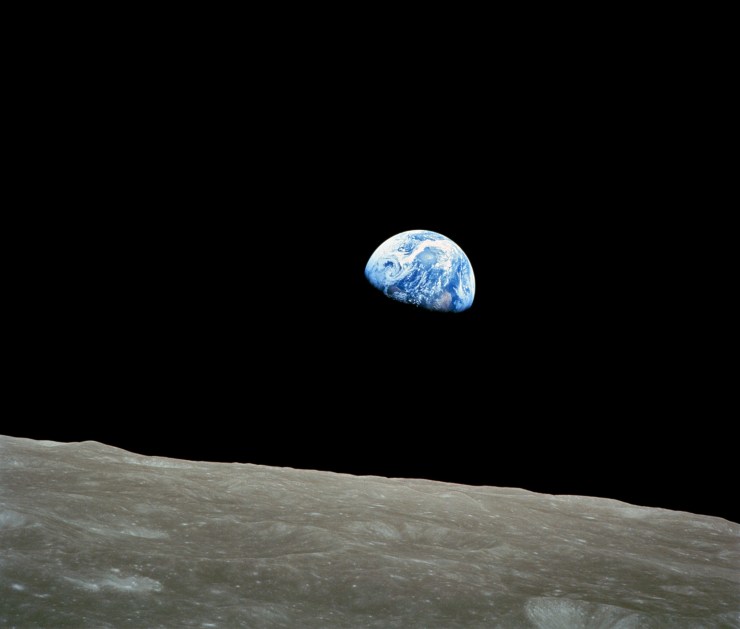
Image courtesy of NASA/Bill Anders
‘Earthrise’―Earth above the lunar horizon. This image was taken by Apollo 8 crewmember Bill Anders on December 24, 1968, while in orbit around the Moon.
Likewise, in Revelation, God gives us a new perspective―a heavenly perspective, God’s perspective. Christ is seated “in the heavenly places” (Ephesians 1:20). We’re seated there with Him (Ephesians 2:6). We need to view everything from that viewpoint―a heavenly viewpoint. And that’s the perspective Revelation gives us.
A drama
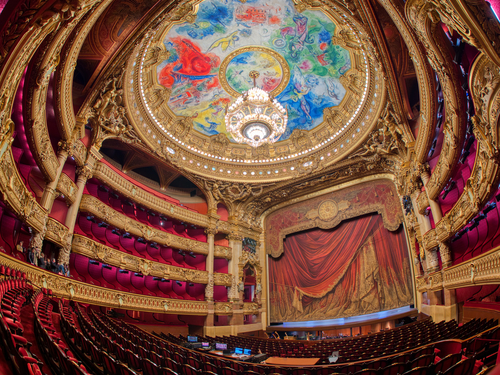
Revelation is a drama. It’s like watching a play at a theatre. This is an interior view of the Palais Garnier, also known as Opéra Garnier, in Paris.
Revelation is a drama. Reading it is like watching a play at a theatre. The curtain rises; and we find ourselves enthralled―and sometimes disturbed―by the events and characters that appear on the stage. We see angels, strange beings full of eyes, and fearsome monsters. Catastrophes sweep across the Earth. We read of a great final battle at a place called Armageddon. A drunken prostitute parades before us, riding a many-headed scarlet beast. And at the end, there’s a city like an enormous cube―a city that is, in fact, a bride!
In a succession of dramatic scenes, God shows us what’s happening in this final period of history―the “last days” (Joel 2:28) that Joel and other Old Testament prophets spoke about. These “last days” began with Jesus’s first coming. They’ll end with His return to Earth. We’re living in the last days (2 Timothy 3:1,12, Hebrews 1:2); God is working out the final phase of His glorious plan of salvation.
And Revelation ends with a scene of triumphant glory. Satan and every evil being are cast into Hell. This world, defiled and spoiled by sin, is restored and renewed. God unveils “a new heaven and a new earth” (21:1). Earth is now a paradise; God lavishes on His beloved people all the blessings of life in His presence for ever.
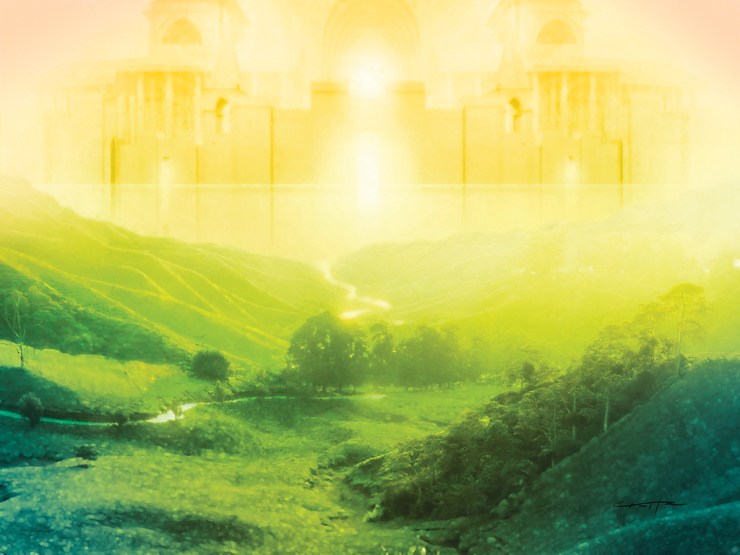
Image © Steve Creitz at ProphecyArt.com
“Then I saw a new heaven and a new earth, for the first heaven and the first earth had passed away, and the sea was no more. And I saw the holy city, new Jerusalem, coming down out of heaven from God, prepared as a bride adorned for her husband.” (Revelation 21:1-2).
The final chapter
Revelation completes the story that the Old Testament begins. The Old Testament begins with a garden―the Garden of Eden. And Revelation ends with a garden―a garden that is, in fact, a garden-city. It’s called New Jerusalem. That city is our eternal home. It’s the garden-city where God’s people live in God’s presence for ever.
And, more than any other New Testament book, we need to read Revelation with our Old Testament open beside us. Revelation repeatedly alludes to things we read in the Old Testament. So the better we know the Old Testament, the better we’ll be able to understand Revelation.
Our Commander’s call to courage
And during this age, a spiritual battle is raging―a battle that began long ago in the Garden of Eden. Every Christian―indeed, every human―is involved in this war. It’s a war between two kingdoms: God’s Kingdom and Satan’s kingdom. And, now in these “last days”, that battle is becoming ever fiercer.

A spiritual battle is raging here on Earth. We, God’s people, are at war. Paul writes: “Put on the whole armour of God, that you may be able to stand against the schemes of the devil. For we do not wrestle against flesh and blood, but against the rulers, against the authorities, against the cosmic powers over this present darkness, against the spiritual forces of evil in the heavenly places.” (Ephesians 6:11–12).
In times of war, great leaders will address their people or their troops to inspire them and strengthen their resolve for the conflict. In the Book of Revelation, our Commander-in-Chief, the Lord Jesus Christ, addresses His troops―that’s us! He reveals the spiritual battle we’re engaged in. He strengthens and equips us for spiritual warfare. He shows us who our enemies are, and how they operate. He shows us how to overcome them. And He assures us of victory, and shows us the final glory that will follow.
Come, Lord Jesus!
And Revelation stirs up our longing for our Lord’s triumphant return. At the end of Revelation, Jesus Himself tells us: “He who testifies to these things says, ’Surely I am coming soon.’” (22:20). John responds with eager anticipation: “Amen. Come, Lord Jesus!” (22:20). We all echo that cry: Come Lord Jesus!
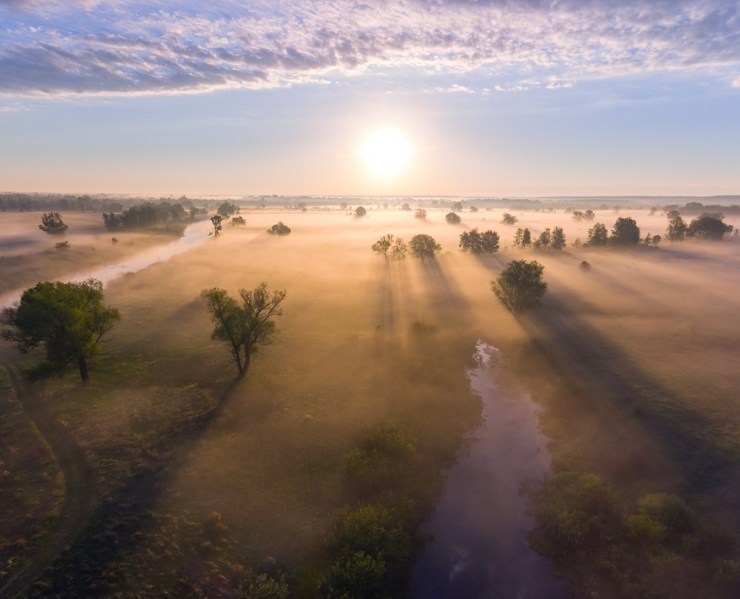
““’Surely I am coming soon.’ Amen. Come, Lord Jesus!” (Revelation 22:20).
Read Revelation 1:1-20. And why not read through the rest of Revelation?
Question 1
The Book of Revelation uses many symbols and images. We encounter things like strange living beings full of eyes, monstrous beasts, and, at the end, a city that’s an enormous cube, that’s also described as a bride. And here in chapter 1, for example, from Jesus’s mouth comes “a sharp two-edged sword” (1:16), and seven churches are “seven lampstands” (1:20). Why, do you think, does God use so many symbols in Revelation?
Question 2
Worship is a key theme in Revelation: there are seven scenes of heavenly worship (for example, 4:8-11, 5:8-14). The word ‘worship’ occurs 22 times (in the ESV)―that’s more than in any other New Testament book. Why, do you think, is worship such an important theme in Revelation?
Question 3
Why do we see this vision of Jesus in 1:9-16 before we read the seven messages to the churches?
For the next part,
Lampstands in a Darkened World,
click HERE.
CREDITS ► Text copyright © 2022 Robert Gordon Betts ► Unless otherwise indicated, all Scripture is taken from the ESV® Bible (The Holy Bible, English Standard Version®), copyright © 2001 by Crossway, a publishing ministry of Good News Publishers. Anglicized English Standard Version copyright © 2002 by Crossway. Used by permission. All rights reserved. The ESV text may not be quoted in any publication made available to the public by a Creative Commons license. The ESV may not be translated in whole or in part into any other language. ► Image on page 1 entitled Earthrise published at https://en.wikipedia.org/wiki/File:NASA-Apollo8-Dec24-Earthrise.jpg This image is in the public domain in the United States because it was solely created by NASA. Image cropped. ► Image of New Jerusalem on page 2 © Steve Creitz ProphecyArt.com
 Creation to New Creation - a Bible Overview
